
TL;DR
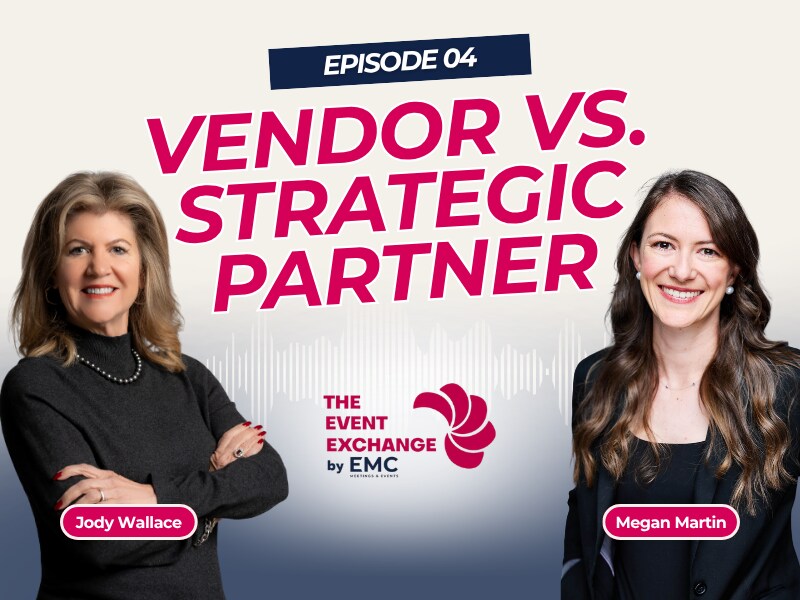
In Episode 4 of The Event Exchange, EMC Meetings & Events explores the difference between vendors and strategic partners, and why that distinction can make or break your event success.
While vendors play an essential role in execution, strategic partners go beyond task completion. They align with your vision, anticipate needs, and collaborate across your entire event ecosystem to deliver meaningful, measurable results. When you shift from transactional relationships to true partnerships, events become more seamless, scalable, and impactful.
_______________________________________________________________________________________
Vendor vs. Strategic Partner: What's the Real Difference?
Not all event support is created equal. And understanding the difference is critical.
Vendors and partners both have a place. Vendors are essential to delivering specific event components. They are often local, specialized, and focused on executing a defined scope of work.
But strategic partners operate differently. They are embedded in your success.
Here's the distinction:
Vendors
- Execute a defined task
- Are reactive and transactional
- Focus on a single deliverable
- Typically work event-to-event
Strategic Partners
- Align with your long-term goals
- Are proactive and consultative
- Work across your full event portfolio
- Help shape strategy—not just execution
The difference isn't about quality - it's about mindset. Partners think beyond the checklist. They think about outcomes.
Why Strategic Partnerships Drive Better Event Outcomes
Events don't happen in isolation. They're part of a larger business ecosystem.
Strategic partners understand that. They don't just show up to execute logistics. They work in lockstep with your team to ensure every element, from ideation to post-event analysis, supports your goals.
This means:
- Understanding your brand, audience, and objectives
- Collaborating across departments and stakeholders
- Anticipating needs before they arise
- Continuously improving from event to event
The result is a more cohesive, consistent, and elevated experience. Or, as one client shared in the episode: "They make it easy."
The Power of a Partner Ecosystem
One of the most important ideas in this episode is the concept of a partner ecosystem.
Just like constructing a building requires electricians, plumbers, and engineers, building a successful event requires a network of trusted experts.
That ecosystem might include:
- Audio/visual and production teams
- Event technology providers
- Data and analytics partners
- Creative and experiential designers
- Logistics and operations specialists
When these partners are aligned (not just individually strong) the experience feels seamless to attendees and effortless to clients.
Even though multiple organizations are involved, the client experiences it as one unified team. That's where the magic happens.
From Idea to Execution: A True Partner's Role
A strategic partner doesn't just step in during planning - they're involved from the very beginning.
That includes:
- Ideation & Storytelling: Shaping the concept, messaging, and vision
- Goal Setting: Defining success metrics and ROI
- Design & Build: Mapping out every component of the experience
- Execution: Delivering flawless on-site experiences
- Post-Event Optimization: Debriefing and improving for next time
Instead of focusing on isolated tasks like transportation or catering, partners manage the full journey from concept to impact.
How Strategic Partnership Builds Trust
At the core of every successful partnership is one thing: trust.
When clients work with a strategic partner, they gain confidence that:
- The right vendors and partners are being selected
- Every detail aligns with their goals
- Challenges will be solved proactively
- The event will deliver the intended outcome
As highlighted in the episode, clients often say they "don't have to worry." And that level of confidence is invaluable… especially in high-stakes, large-scale events.
Signs You're Working with a Vendor (Not a Partner)
If you're evaluating your current agency or support teams, here are a few red flags:
- They operate in a single lane (logistics only, for example)
- They wait for direction instead of offering ideas
- They don't engage in post-event strategy or improvement
- They treat each event as a one-off project
- They don't ask about your broader goals or business outcomes
If this sounds familiar, it may be time to elevate the relationship.
How to Evaluate (or Build) a Strategic Partnership
Looking to move beyond a vendor relationship? Start by asking better questions.
When evaluating an agency or partner, consider:
- What does your partner ecosystem look like?
- How do you support events across the full lifecycle?
- How do you align with our internal team and strengths?
- How do you measure success and improve over time?
- Can you support multiple event types across our portfolio?
The answers will quickly reveal whether you're working with a doer or a true partner.
See how EMCME Partners for Performance
Small Shifts That Create Big Impact
Moving from vendor to partner doesn't always require a complete overhaul. Sometimes it starts with simple shifts:
- Move from transactional conversations to strategic ones
- Share broader business goals & not just event specs
- Invite partners into early-stage planning
- Hold regular business reviews, not just project check-ins
- Encourage collaboration across your full event portfolio
Partnerships grow through visibility, trust, and shared accountability.
Turning Alignment into Better Events
When everyone from your internal team to your external partners is aligned, the difference is clear.
You'll notice your events become more cohesive and strategic, and adaptable and impactful for its attendees.
And instead of managing moving parts, your team will be focused on guiding a unified experience - one designed to deliver results. Because when all partners are aligned around one goal, execution becomes effortless.
_______________________________________________________________________________________
One Action to Take Right Now
If you want better outcomes from your events, start here:
Evaluate your relationships.
Ask yourself:
- Are we working with vendors or strategic partners?
- Are we thinking event-by-event or portfolio-wide?
- Are our partners aligned with our long-term vision?
Then take the first step toward building a true partnership. Because when you move from transactional to strategic, everything becomes easier and more effective.
_______________________________________________________________________________________
Frequently Asked Questions
1. What's the difference between a vendor and a strategic partner in events?
A vendor executes a specific task, while a strategic partner collaborates across your entire event strategy to drive long-term results.
2. Why are strategic partners important for event success?
They align with your goals, anticipate needs, and ensure all elements of the event work together to deliver meaningful outcomes.
3. Can vendors become strategic partners?
Yes—by taking a more proactive, consultative approach and engaging beyond a single scope of work.
4. What is a partner ecosystem?
It's a network of trusted experts—like AV, tech, and logistics partners—who work together seamlessly to deliver the event.
5. What's the biggest takeaway from Episode 4?
Events are stronger when your relationships are stronger. Strategic partners don't just execute—they elevate your entire event ecosystem.

